
Intel E28F128J3A150: A Deep Dive into the Legacy 16-Megabit Flash Memory Chip
In the annals of semiconductor history, few products are as quietly influential as Intel's E28F128J3A150. This 16-megabit (2MB) flash memory chip, a product of the late 1990s and early 2000s, represents a pivotal moment in the evolution of non-volatile storage. It was a key enabler for the burgeoning digital age, powering everything from the first generations of mobile phones to critical networking and embedded systems hardware. This deep dive explores the architecture, significance, and lasting legacy of this foundational component.
At its core, the E28F128J3A150 is a 16-megabit (2M x 8) CMOS flash memory device. Its 8-bit wide data bus was the industry standard for the era, allowing for straightforward integration with the microcontrollers and early processors of the time. Fabricated on a 0.25-micron process node, it was a technological marvel for its day, offering a balance of density, performance, and cost that was critical for mass-market adoption.
A defining characteristic of this chip was its adherence to the JEDEC-standard pinout. This was not a trivial feature; it meant the E28F128J3A150 was a drop-in replacement for competing devices from other manufacturers. This standardization fostered a competitive ecosystem, drove down prices, and gave hardware designers flexibility and security of supply, accelerating innovation across multiple industries.
The chip's architecture was built around a bulk erase function and a main/parameter sector architecture. The memory array was divided into 128 uniform 16-Kbyte sectors. This design allowed for tremendous flexibility. Firmware could be stored in one set of sectors, while smaller, frequently updated data blocks—like configuration parameters or user settings—could be written to individual sectors without needing to erase the entire chip. This significantly improved effective write speeds and simplified system design.
Operating at a single 3.3-volt power supply (VCC), it was part of the industry-wide shift towards lower voltage components. This was crucial for the development of battery-powered portable devices, as it drastically reduced power consumption compared to the 5V chips that preceded it. The "150" in its part number signifies a 150ns access time, a speed that was more than adequate for the execute-in-place (XIP) applications it was designed for, where code was run directly from the flash memory.
The programming and erasure process was a testament to the technology of the time. Unlike modern eMMC or NVMe drives that handle low-level management internally, this chip required the host system's CPU to manage the entire process. It utilized a command-line interface to initiate complex sequences for programming (writing) and erasing data. This involved writing specific hex codes to the chip's command register to put it into the correct state, a process that had to be meticulously handled by device drivers and system firmware.
The legacy of the Intel E28F128J3A150 is immense. It was the workhorse storage component in a vast array of legacy systems, including:
Early Mobile Phones: Storing the baseband operating system and user data.
Networking Equipment: Holding firmware for routers, switches, and hubs.
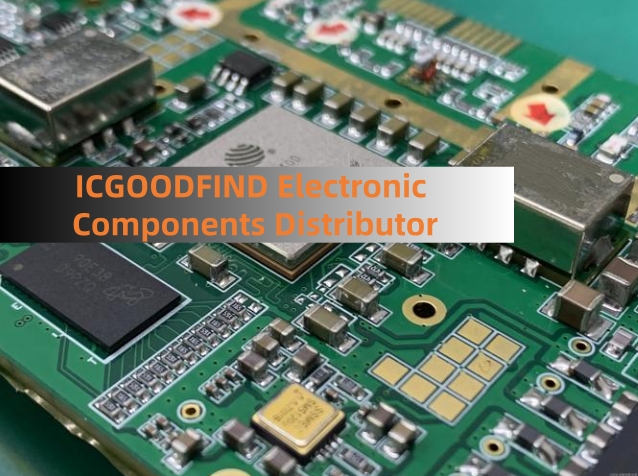
Embedded Systems: Serving as the primary code storage in industrial controllers, automotive systems, and test equipment.
PC BIOS Chips: In many systems, this family of chips held the critical BIOS firmware.
While its capacity is minuscule by today's standards, its role was foundational. It helped transition the industry from EPROMs (which required UV light for erasure) to electronically erasable memory, enabling the firmware-upgradeable devices we take for granted today. It embodied the shift towards lower power consumption and standardized form factors that continue to drive the industry.
ICGOO
The Intel E28F128J3A150 is far more than a obsolete piece of silicon; it is a landmark of semiconductor engineering. It exemplifies the transition to standardized, low-voltage, sector-based flash memory that became the bedrock of the connected world. For engineers and historians, it remains a classic example of the right technology arriving at the right time to power a digital revolution. Its DNA is evident in every SD card, USB drive, and SSD produced today, a true testament to its enduring legacy.
Keywords:
1. Flash Memory
2. Non-Volatile Storage
3. JEDEC Standard
4. 3.3-Volt Operation
5. Sector Erase Architecture

