
Microchip ATMEGA16A-AU: An In-Depth Technical Overview and Application Guide
The Microchip ATMEGA16A-AU is a high-performance, low-power 8-bit AVR RISC-based microcontroller that has established itself as a versatile workhorse in the embedded systems industry. Combining a rich set of peripherals with a well-understood architecture, it remains a popular choice for a vast array of applications, from industrial control to consumer electronics. This article provides a detailed technical overview and a guide to its practical application.
Architectural Core and Memory
At the heart of the ATMEGA16A-AU lies an advanced AVR RISC architecture. This core executes powerful instructions in a single clock cycle, achieving throughputs approaching 1 MIPS per MHz, allowing the system designer to optimize power consumption versus processing speed. The chip features 16 KB of in-system self-programmable Flash memory for program storage, 1 KB of SRAM for data handling, and 512 bytes of EEPROM for storing critical data that must persist without power. This robust memory configuration supports complex programs and data manipulation tasks.
Key Peripherals and Features
The device is packed with integrated features that minimize external component count, reduce system cost, and simplify design:
I/O Ports: Four 8-bit bidirectional I/O ports (Ports A, B, C, D) provide 32 programmable I/O lines, offering immense flexibility in interfacing with sensors, actuators, and other ICs.
Timers/Counters: Two 8-bit timers and one 16-bit timer with separate prescalers and multiple operating modes (compare, capture, PWM) are essential for real-time control, waveform generation, and event counting.
Communication Interfaces: It supports multiple standard serial communications protocols, including a USART (Universal Synchronous/Asynchronous Receiver/Transmitter) for RS-232/485 communication, an SPI (Serial Peripheral Interface) for high-speed communication with peripherals, and a TWI (Two-Wire Interface) compatible with I2C for connecting a network of sensors.
Analog Capabilities: An 8-channel, 10-bit ADC (Analog-to-Digital Converter) allows the microcontroller to interface directly with analog sensors, measuring voltages with good resolution.
Other Features: Additional capabilities include a programmable Watchdog Timer, an internal calibrated oscillator, and six sleep modes for advanced power management.
The "-AU" Suffix: Package and Assembly
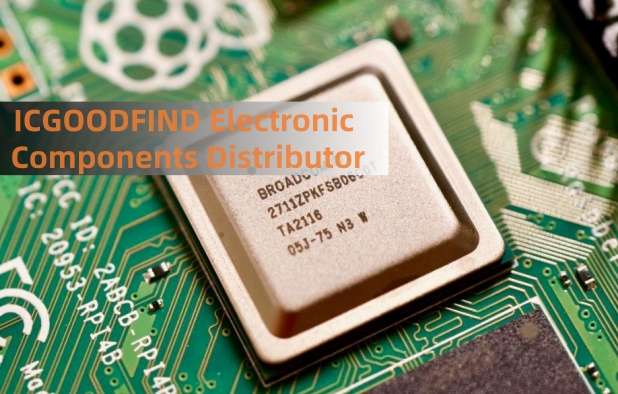
The "-AU" suffix in the part number denotes the 44-lead TQFP (Thin Quad Flat Pack) package. This surface-mount package is compact and designed for automated assembly processes, making it suitable for high-volume production. Its relatively small footprint is ideal for space-constrained PCB designs.
Application Guide
The ATMEGA16A-AU's feature set makes it suitable for a diverse range of applications:
Industrial Control Systems: Used in motor control units, power monitoring systems, and process controllers, leveraging its timers, PWM, and ADC.
Automotive Electronics: Employed in body control modules, security systems, and dashboard displays, where its robustness and communication interfaces are key.
Consumer Electronics: Powers advanced appliances, touch interfaces, and hobbyist projects like robotics and drones.
Embedded Data Acquisition: Functions as the brain for data loggers and sensor nodes, utilizing its ADC, EEPROM, and USART/SPI for data collection and transmission.
When designing with the ATMEGA16A-AU, developers typically use the Atmel Studio/Microchip MPLAB X IDE and the AVR-GCC compiler toolchain. In-system programming (ISP) via the SPI interface is the standard method for flashing the microcontroller, facilitated by programmers like the AVRISP mkII.
ICGOODFIND Summary
ICGOOThe Microchip ATMEGA16A-AU stands as a testament to a well-balanced and powerful 8-bit microcontroller design. Its combination of ample memory, a comprehensive set of on-chip peripherals (including ADC, timers, and multiple serial interfaces), and a proven RISC architecture provides an excellent platform for both novice and experienced engineers to develop efficient and reliable embedded systems across countless industries.
Keywords:
1. AVR Microcontroller
2. Embedded Systems
3. TQFP Package
4. Peripheral Interface
5. In-System Programming (ISP)

